4,98 von 5
Hervorragende Kundenbewertungen.
Cookies
Wir verwenden Cookies. Viele sind notwendig, um die Website und ihre Funktionen zu betreiben, andere sind für statistische oder Marketingzwecke. Mit der Entscheidung "Nur essentielle Cookies akzeptieren" werden wir Ihre Privatsphäre respektieren und keine Cookies setzen, die nicht für den Betrieb der Seite notwendig sind.
Essenzielle
Statistik & Marketing
Alle akzeptieren
Nur Essentielle Cookies akzeptieren
Individuelle Cookie Einstellungen
Speichern & schließen
Essenzielle
Essenzielle Cookies ermöglichen grundlegende Funktionen und sind für die einwandfreie Funktion der Website erforderlich.
Statistik & Marketing
Marketing-Cookies werden von Drittanbietern oder Publishern verwendet, um personalisierte Werbung anzuzeigen. Sie tun dies, indem sie Besucher über Websites hinweg verfolgen.
JEDE POLYGONALE NATURSTEINPLATTE EIN UNIKAT – FÜR TERRASSE, GARTEN, EINFAHRT UND FASSADE
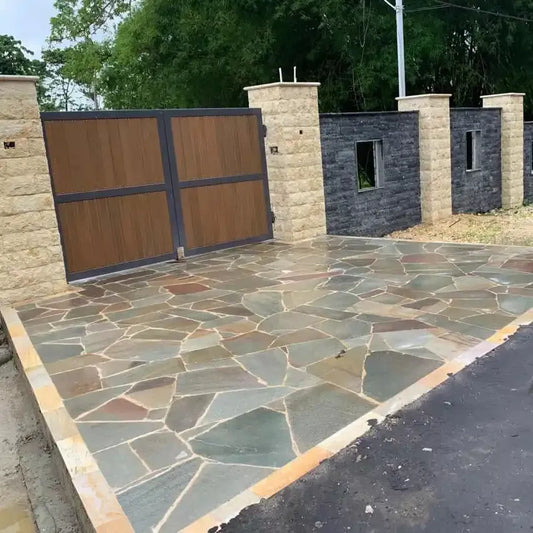
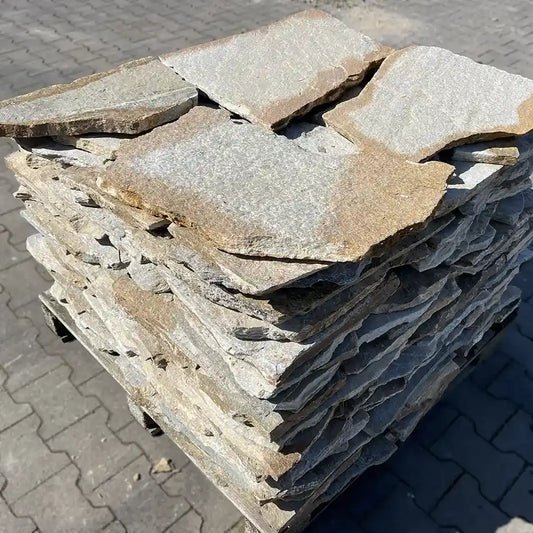
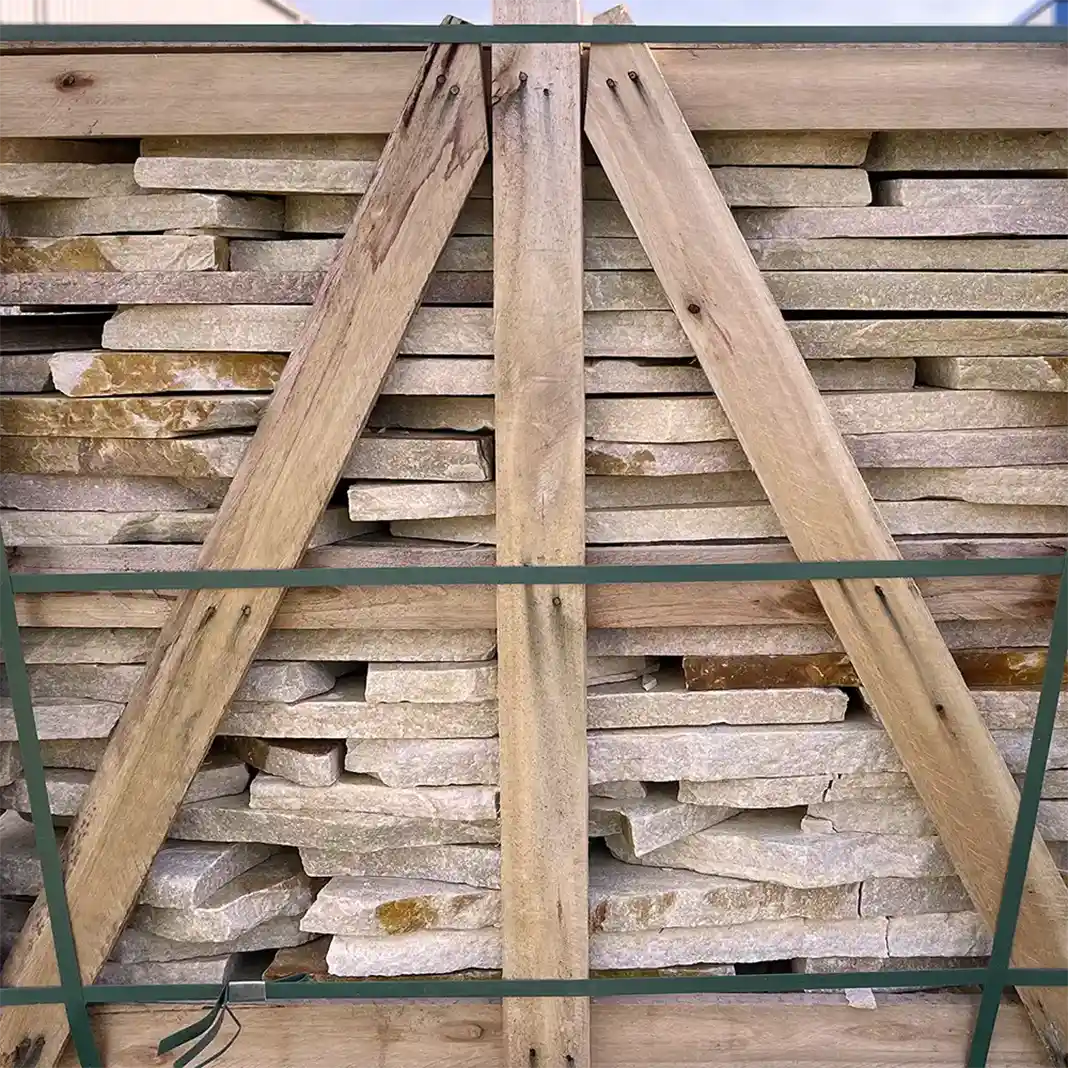
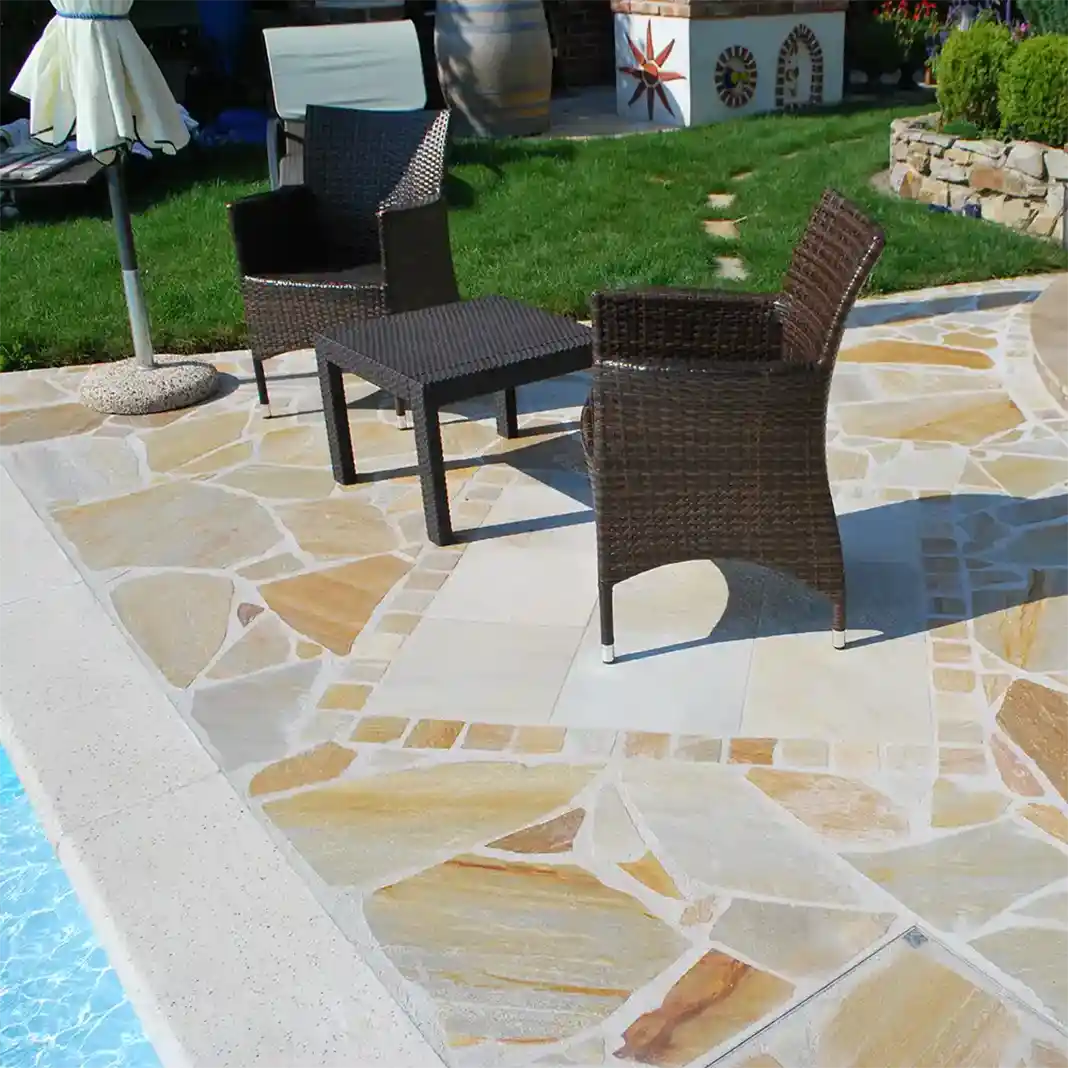
Our wide range of natural stone slabs offers the perfect solution for every taste. Whether indoors or outdoors - we ensure that your home becomes even more beautiful with our natural stone slabs - with split rough surfaces! One of our bestsellers is Grauwacke, a natural stone that is excellent for use as flooring, wall cladding, or base cladding. Natural polygonal shapes combined with vibrant color nuances create a Mediterranean charm and special flair. You can also inquire about large Grauwacke natural stones, for example, with a size of 1.20 meters. We can usually deliver what nature provides. For use as flooring, slab thicknesses of at least 2 cm are particularly in demand. Use possibilities of "heavy stones", which we understand to be slab thicknesses of 6 cm and more, include garden paths, lawn stepping stones, or entrance or exit driveways. In some cases, the slabs can even serve as a ledge for a stream.
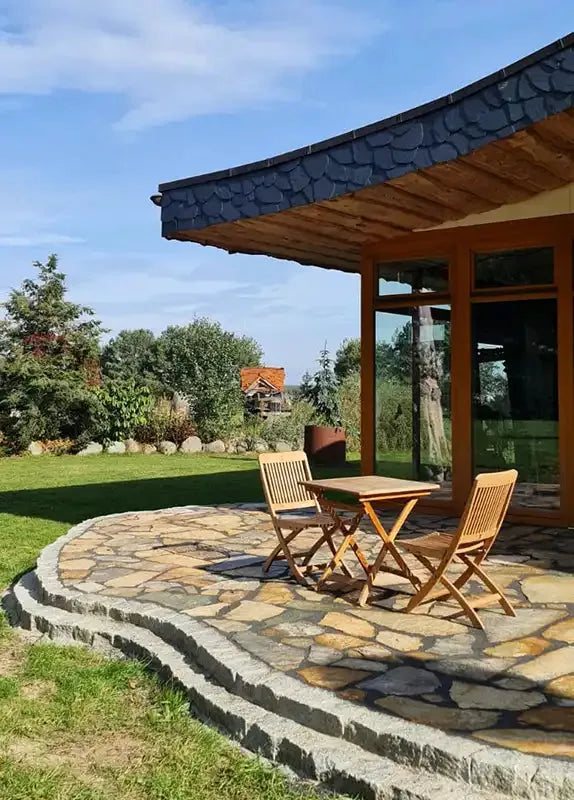
Natursteinplatten sind Polygonalplatten aus echtem Naturstein, die aus gewachsenem Gestein gewonnen und je nach Material, Stärke und Oberfläche für unterschiedliche Bau- und Gestaltungsprojekte verwendet werden. Im Außenbereich werden sie häufig als Terrassenbelag, Gartenpfad, Gehweg, Einfahrt, Fassadenverkleidung oder Sockelverkleidung eingesetzt.
Bei polygonalen Natursteinplatten entsteht die besondere Wirkung durch unregelmäßige Formen, natürliche Bruchkanten und ein lebendiges Fugenbild. Jede Platte unterscheidet sich in Farbe, Struktur und Form. Genau dadurch wirken Flächen aus Grauwacke, Quarzit, Schiefer oder Porphyr natürlich, individuell und dauerhaft hochwertig.
Natursteinplatten werden je nach Einsatzbereich unterschiedlich ausgewählt. Für eine Terrasse zählt vor allem eine angenehme Oberfläche, eine passende Stärke und eine dauerhaft schöne Optik. Für Gartenpfade und Gehwege sind Trittsicherheit, Frostbeständigkeit und eine natürliche Einbindung in den Garten wichtig. Bei Einfahrten und stärker belasteten Flächen kommt es zusätzlich auf eine geeignete Plattenstärke und einen tragfähigen Unterbau an. Für Fassaden, Sockel und Wandverkleidungen sind dünnere Natursteinplatten mit geringerem Gewicht sinnvoll.
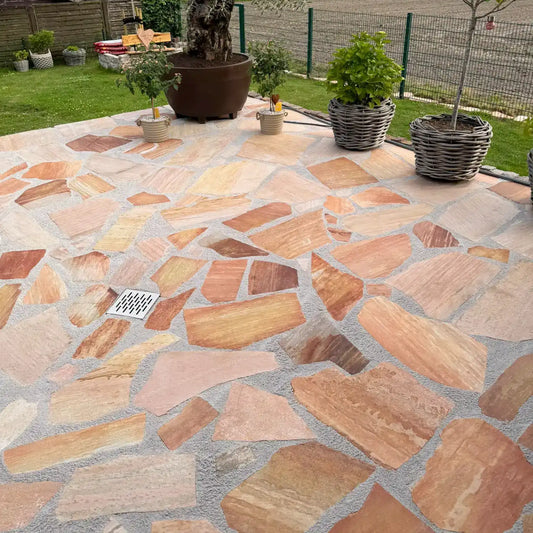
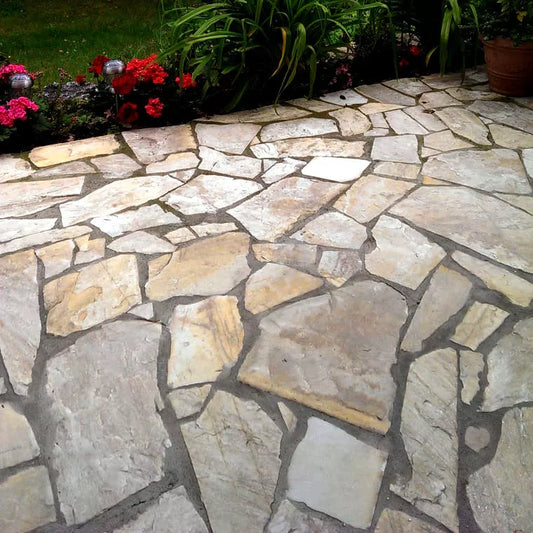
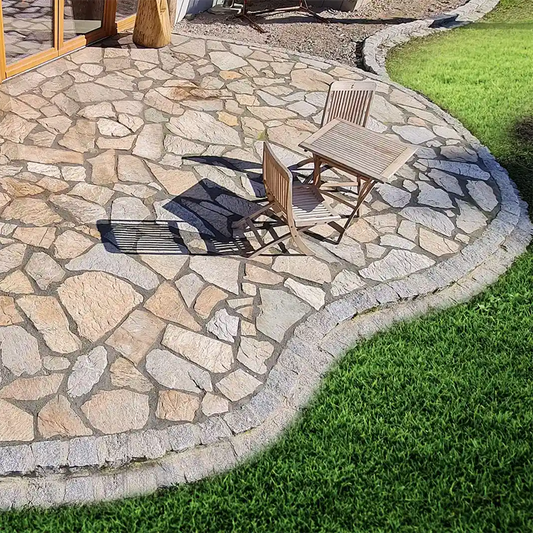
Für Terrassen eignen sich vor allem polygonale Natursteinplatten aus Quarzit, Grauwacke, Schiefer oder Porphyr. Sie schaffen eine natürliche Fläche mit lebendigem Fugenbild und wirken deutlich individueller als gleichförmige Beton- oder Keramikplatten.
Für Gartenpfade und Gehwege sind robuste Bruchsteinplatten ideal, weil sie sich harmonisch in Beete, Rasenflächen und natürliche Gartengestaltungen einfügen. Je nach gewünschter Wirkung kannst Du zwischen helleren Quarziten, rustikaler Grauwacke, Schiefer oder Porphyr wählen.
Für Einfahrten und stark belastete Flächen müssen Natursteinplatten passend zur Belastung ausgewählt werden. Entscheidend sind Plattenstärke, Material, Unterbau und Verlegeart. Besonders starke Quarzit- oder Grauwackeplatten können hier eine hochwertige und belastbare Lösung sein.
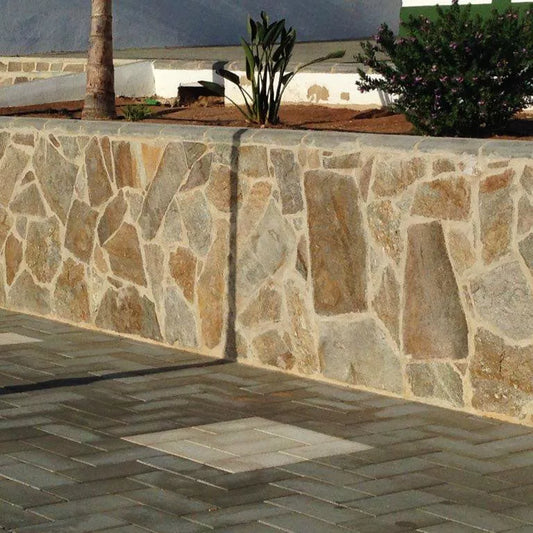
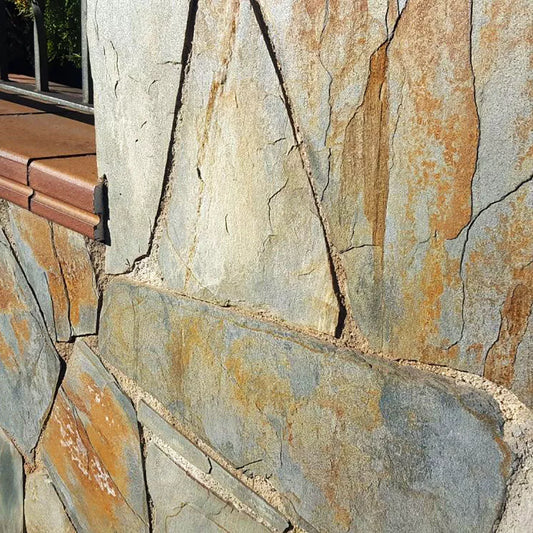
Für Fassaden, Sockel und Wandverkleidungen werden dünnere Natursteinplatten oder Fassadensteine eingesetzt. Sie bringen die natürliche Struktur des Steins an Hauswand, Gartenmauer, Kaminwand oder Sockel und sorgen für eine hochwertige, langlebige Oberfläche.
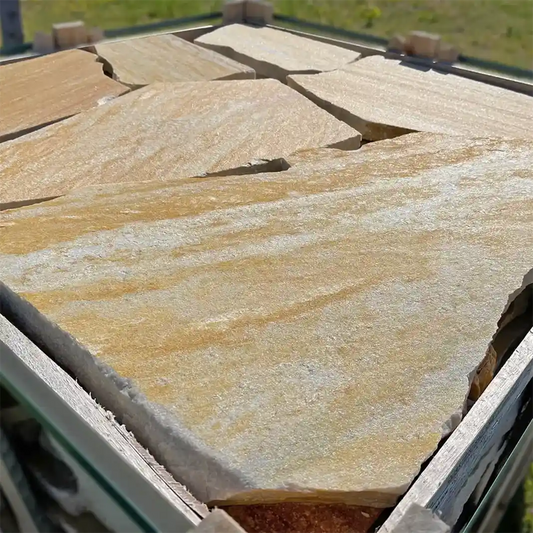
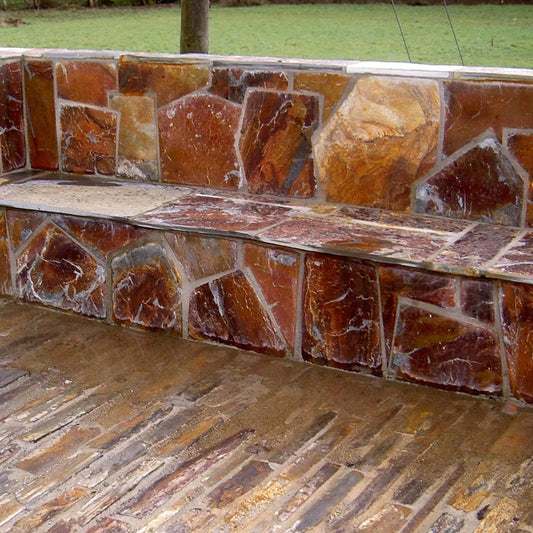
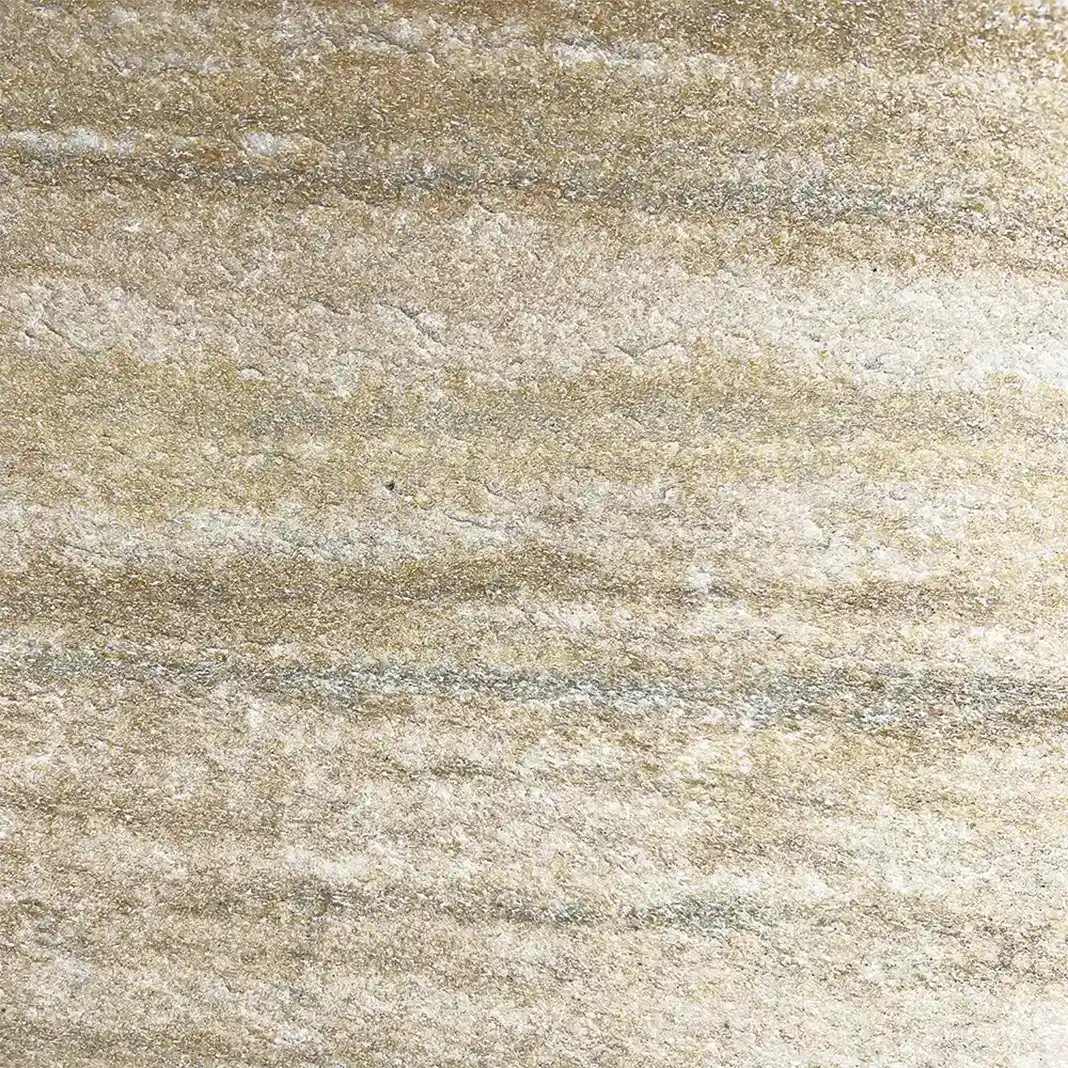
The illustration shows an example or excerpt of the surface of a greywacke natural stone.
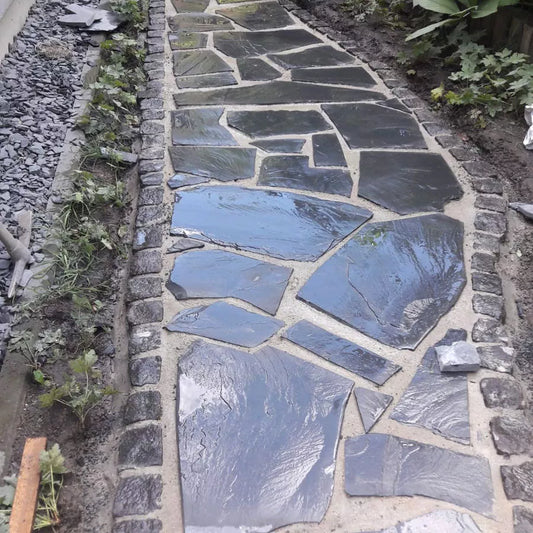
The illustration shows an example or excerpt of the surface of a Polaris Quartzite.
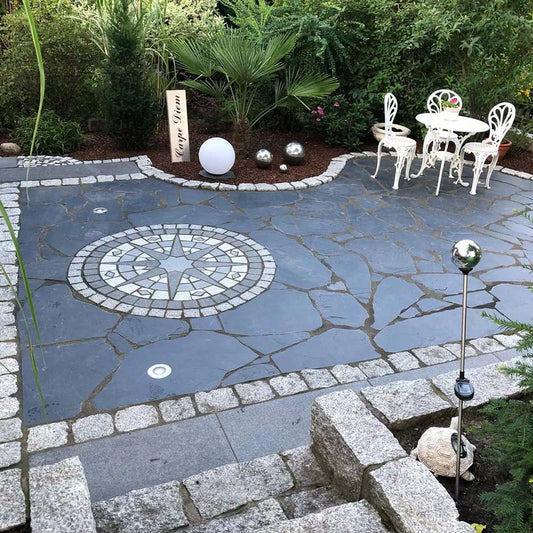
The illustration shows an example or excerpt of the surface of a Scabra slate.
Die richtige Stärke einer Natursteinplatte hängt stark vom Einsatzbereich ab. Für eine Wandverkleidung oder Fassade werden andere Platten benötigt als für eine Terrasse, einen Gartenpfad oder eine Einfahrt. Entscheidend sind Belastung, Untergrund, Verlegeart und das jeweilige Natursteinmaterial.
Dünnere Natursteinplatten und Fassadensteine mit ca. 1–3 cm Stärke eignen sich besonders für Fassaden, Sockel, Gartenmauern, Kaminwände und Wandverkleidungen. Hier steht nicht die Belastung durch Begehen oder Befahren im Vordergrund, sondern ein geringeres Gewicht und eine gute Verarbeitung an tragfähigen Untergründen. Gern beraten wir Sie hier im Vorfeld.
Natursteinplatten mit ca. 2–4 cm Stärke werden häufig für Terrassen, Gartenflächen und Wege eingesetzt. Sie verbinden eine natürliche Optik mit guter Stabilität und eignen sich für viele private Außenbereiche, wenn Unterbau und Verlegung passend ausgeführt werden. Wir verfügen über ein eigenes erprobtes betonfreies Verlegesystem - COMPRESA. Auch die fachgerechte Verlegung bieten wir an.
Für stärker belastete Flächen wie Gehwege, Zufahrten oder Einfahrten sind kräftigere Natursteinplatten sinnvoll. Hier zählen neben der Steinart vor allem Plattenstärke, tragfähiger Unterbau und fachgerechte Verlegung. Besonders robuste Grauwacke- und Quarzitplatten können für solche Flächen eine hochwertige und belastbare Lösung sein.
Eine starke Natursteinplatte allein reicht nicht aus, wenn der Unterbau nicht zur späteren Nutzung passt. Erst das Zusammenspiel aus passender Plattenstärke, stabilem Untergrund, geeigneter Verlegeart und sauberer Fuge sorgt dafür, dass die Fläche dauerhaft funktioniert. Gern beraten wir Sie hier ausführlich. Auch haben wir ein Profi Verlege-Team im Einsatz.
Viele Restposten eignen sich ideal für Terrasse, Gartenweg, Wandverkleidung, Sockelverkleidung oder kleinere Natursteinprojekte. Prüfen Sie die verfügbare Menge direkt am Produkt und sichern Sie sich passende Natursteinplatten zum reduzierten Preis.
Damit Natursteinplatten dauerhaft schön und stabil liegen, müssen Stein, Unterbau, Verlegeart und Fuge zusammenpassen. Eine hochwertige Platte allein reicht nicht aus, wenn der Untergrund nicht tragfähig vorbereitet ist oder die Fuge nicht zum Aufbau passt. Deshalb solltest Du bei der Planung immer die spätere Nutzung der Fläche berücksichtigen: Terrasse, Gartenpfad, Gehweg, Einfahrt oder Fassadenbereich stellen unterschiedliche Anforderungen.
Der Unterbau ist die Grundlage für eine dauerhaft stabile Fläche. Für Terrassen, Gartenpfade und Einfahrten muss er tragfähig, wasserdurchlässig und auf die spätere Belastung abgestimmt sein. Besonders bei befahrenen Flächen ist ein sauber geplanter Aufbau entscheidend, damit sich die Natursteinplatten später nicht verschieben oder absacken.
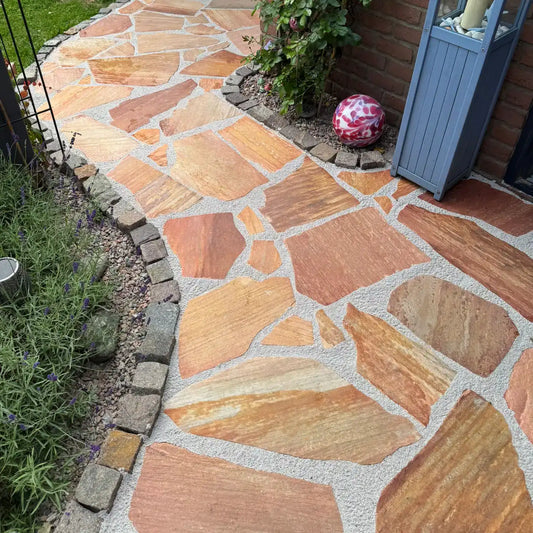
Bei polygonalen Natursteinplatten gehört die Fuge zur Gestaltung. Sie gleicht die unregelmäßigen Formen der Bruchsteinplatten aus und prägt die Wirkung der gesamten Fläche. Mit Colorquarz-Fugenmörtel lässt sich die Fugenfarbe passend zum Naturstein, zur Terrasse und zum Garten auswählen.
Mit dem COMPRESA-System bietet bruchsteinplatten.de eine durchdachte Möglichkeit, polygonale Natursteinplatten betonfrei, wasserdurchlässig und flexibel zu verlegen. Das System verbindet Natursteinplatten, Spezialquarzkies, Kunstharz, Colorquarz-Fugenmörtel und Imprägnierung zu einer Komplettlösung für hochwertige Außenflächen.
Wenn Du Deine Natursteinplatten nicht selbst verlegen möchtest, kannst Du Dein Projekt auch professionell umsetzen lassen. Besonders bei größeren Flächen, Einfahrten oder technisch anspruchsvollen Projekten ist eine fachgerechte Planung und Ausführung sinnvoll.
Use the filters to sort by plate thickness, purpose, square meters, or stone type.
Für eine Terrasse sind Quarzit, Schiefer, Grauwacke und Porphyr interessante Natursteine mit natürlicher Oberfläche und lebendigem Fugenbild. Für Gartenpfade und Gehwege eignen sich robuste Bruchsteinplatten, die sich natürlich in den Garten einfügen. Für Einfahrten und stärker belastete Flächen solltest Du besonders auf Plattenstärke, Unterbau und Verlegeart achten.
Für Fassade, Sockel und Wandverkleidung sind dünnere Fassadensteine und Natursteinplatten mit geringerem Gewicht sinnvoll. Nutze die Filter nach Material, Stärke, Einsatzbereich und Fläche, um schneller zu den passenden Natursteinplatten zu kommen. Wenn Du unsicher bist, bestelle zuerst Musterplatten oder lass Dich beraten, bevor Du Dein Projekt planst.
5.0 / 5.0
(1) 1 total reviews
bruchsteinplatten.de ist auf polygonale Bruchsteinplatten und Natursteinplatten aus Grauwacke, Quarzit, Schiefer und Porphyr spezialisiert. Du bekommst bei uns nicht nur einzelne Steine, sondern auch Muster, Zubehör, Colorquarz-Fugenmörtel, Kunstharz, Imprägnierung, Unterbau-Lösungen, Beratung und auf Wunsch professionelle Verlegung in ganz Deutschland.
So kannst Du Dein Projekt vom ersten Muster bis zur fertigen Fläche deutlich sicherer planen – egal ob Terrasse, Gartenpfad, Einfahrt, Fassade oder Sockelverkleidung.
Naturstein ist ein echtes Naturprodukt. Farbe, Struktur, Oberfläche und Bruchform können je nach Steinart und Charge unterschiedlich wirken. Deshalb ist eine Musterbestellung besonders sinnvoll, wenn Du Deine Terrasse, Deinen Gartenpfad, Deine Einfahrt, Fassade oder Sockelverkleidung sicher planen möchtest. Was Du dabei prüfen kannst ist wie der Stein wirkt, d.h. die Haptik und Optik. Immer mit der Klarheit im Hintergrund, jeder Stein ist ein Unikat.
Ein Muster zeigt Dir, wie sich der Stein in echt anfühlt, wie die Oberfläche im Tageslicht wirkt und wie gut die Farbe zu Haus, Garten, Fassade, Pflanzen, Möbeln und vorhandenen Materialien passt. Besonders bei polygonalen Natursteinplatten lohnt sich dieser Eindruck, weil jede Platte ein Unikat ist.
Die Wirkung einer Fläche entsteht nicht nur durch den Stein selbst, sondern auch durch die Fuge. Mit einer passenden Colorquarz-Fuge kannst Du die Natursteinplatten ruhiger, heller, kontrastreicher oder wärmer wirken lassen. Deshalb ist es sinnvoll, Steinmuster und Fugenfarbe gemeinsam zu betrachten.
Wenn Du zwischen Grauwacke, Quarzit, Schiefer oder Porphyr schwankst, helfen Muster und Beratung bei der Entscheidung. So kannst Du vor der Bestellung besser einschätzen, welche Natursteinplatten optisch, technisch und praktisch zu Deinem Projekt passen. Für einen kleinen Kostenanteil senden wir Dir Deine gewünschten Musterbruchstücke zu.
Our natural stone quartzite slabs such as Deep Sea, Clara, Kallisto, or Lemuria Light, etc. come from Europe, unlike the well-known Rio Yellow and Rio Rosario quartz sandstones from Brazil. Quartzite slabs are also durable hard stones mainly used for outdoor areas and are frost-resistant. To maintain the external appearance, one should not exclude an impregnation in color-enhancing or natural effect version. We offer our slate slabs in three variants: Schiefer Negra, whose deep black has made its name, and the brothers with higher iron oxide content, which have a rusty look. We also offer Schiefer Scabra with light rust tones and Antigua Schiefer, which almost looks like an iron plate - ideal for borders around a grill or fireplace.
Our Grauwacke, quartzite slabs, and slate slabs are extremely robust and durable.
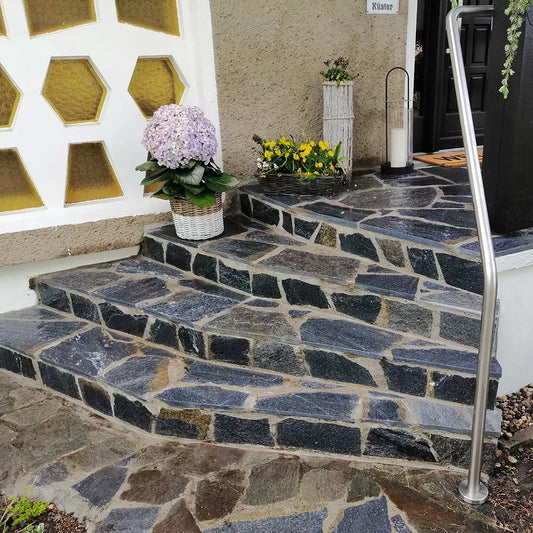
They can be ordered directly online from us, making them a perfect solution for landscaping or other outdoor projects. For indoor use, we recommend the use of finer slabs that provide a very elegant look. Our slate and quartzite stones are very popular and are excellent for floors, walls, or stairs. They can be used in combination with other materials such as wood, glass, or metal to achieve a unique aesthetic.
Natural stone is the best choice for a wall cladding with style. It enchants with its natural elegance, creates a stylish ambiance, and seduces with a unique and varied play of colors. With natural stone veneers, your wall or facade is upgraded inside and out, impressing with diverse accents and nuances in shape and color effect. Thanks to its natural origin, natural stone carries a piece of history and radiates pure vitality. Our extensive selection of natural stones will inspire you.
white, light gray, various shades of gray, partially small dark inclusions
Broken stone slabs are unique natural products with varying shapes, colors, and structures. These differences give the laid surface a distinctive charm and make it truly unique.
These natural variations highlight the beauty of the stones and are not a reason for complaint.
Natural stone sample plates are a great way to get a feel for the different stones and make the right decision. They allow you to see and feel the broken plates you have selected for your project in terms of color, shape, structure, and texture. With sample plates, you can ensure in advance that you are buying a product that meets your expectations. When we send out natural stone sample plates, we usually pack 2-3 stones of one variety in the package. This is precisely because it is a natural product that radiates liveliness through different shapes, structures, and color nuances.
bruchsteinplatten.de

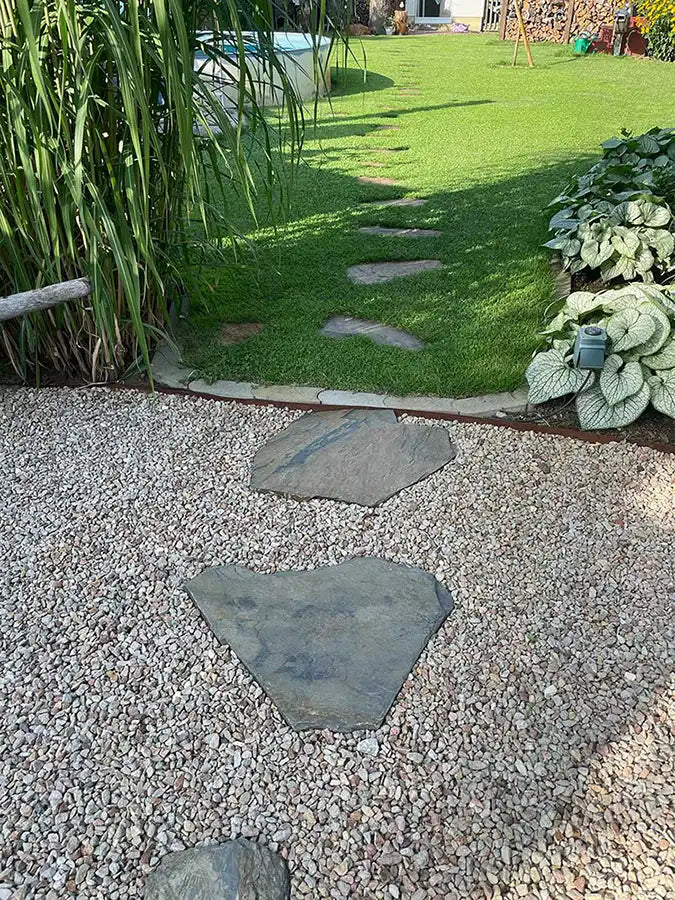
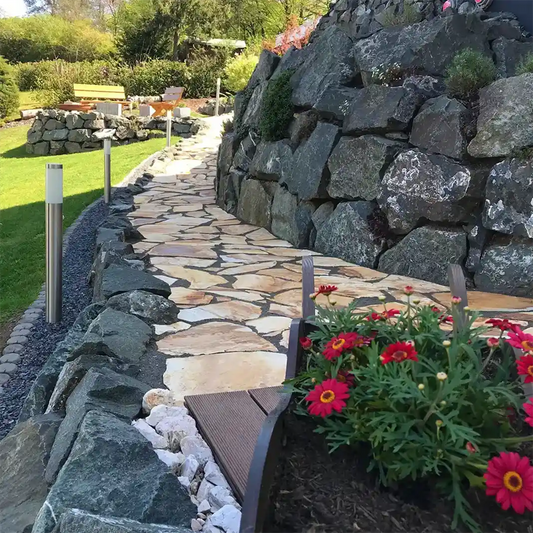
Stepping stones made of natural stone are an ideal choice for gardens as they are rustic, frost-resistant, and relatively inexpensive. Stone slabs are naturally diverse in color and shape, allowing you to give your garden an individual look. Natural stone paths are an easy way to create a naturally beautiful pathway in your home garden. They are also an appealing way to create a garden path that can easily adapt to your garden design. Polygonal stone slabs are robust and durable and can typically last for decades. They are an easy way to create a garden design with walkway slabs that harmoniously flow through the garden.
Natural stone slabs are slabs made from natural stones such as granite, marble, sandstone, travertine, slate, limestone, and quartzite. They are suitable for various purposes, such as the construction of pavements, terraces, patios, stair steps, and sometimes even as wall cladding. Natural stone slabs are durable, weather-resistant, and require little maintenance.
The production of natural stone slabs depends on the type of stone and the size of the slab. Typically, a large stone block is broken from a quarry and cut or broken into smaller blocks or slabs.
Yes, patio slabs made of natural stone feel cold. The reason for this is that natural stone is a natural conductor of heat and transfers the cold from the ground through the slabs. Therefore, they usually feel cool, especially at low temperatures. When the sun shines on the slabs, they warm up or heat up, depending on the type of stone they may retain the heat more or less even after sunset.
Slate natural stone feels cool and smooth to the touch. Naturally, it flakes off slightly at the edges. However, this is not noticeable when embedded in quartz gravel (joint mortar).
It depends on the type of natural stone. In general, it can be said that hard stones and stones with a higher density such as Gneiss, Grauwacke, Quarzit, and Porphyry are insensitive and have a slightly non-absorbent property due to their density. Natural stone slabs made of Schiefer are also rather insensitive, but could show small chippings of the first layer due to their layered structure when subjected to force. On the other hand, limestone and sandstone can easily chip and are very susceptible to stains, which is why we do not offer these stones in our range. We generally recommend sealing the stones (Imprägnierung) and cleaning them regularly depending on the level of use. Once the surface of a stone no longer repels water (water test), it is time to reseal it.
No, our Grauwacke and Quartzite stones are hard stones that are resistant and do not scratch. Slate slabs, on the other hand, have a smooth surface and are susceptible to scratches, although not as sensitive as soft stones (limestone and sandstone). In any case, we recommend surface protection through impregnation and if you handle them carefully, you can of course avoid scratching with slate.
There are many different natural stone slabs that are suitable for laying on the terrace. Some popular options include granite, slate, gneiss, porphyry, graywacke, and quartzite slabs. All these types of natural stone slabs are very durable and can create a beautiful ambiance. However, it is important to consider the differences in the properties of each stone when choosing the right type of natural stone slabs for your own natural stone terrace in order to achieve optimal results. We are happy to advise you on this.
We recommend the concrete-free installation with quartz gravel and synthetic resin as a substructure, as well as a joint made of quartz gravel joint mortar also with synthetic resin. For this purpose, we have written an installation guide. We advise you on this and actively support you if you wish. For DIY enthusiasts, we have developed an all-inclusive package for terraces, called COMPRESA, which offers a set starting from 10 m² that already contains everything needed for installation and grouting.
The cost of laying natural stone patio slabs depends on various factors such as the type and size of the slabs, the subsoil, the effort for materials and labor, as well as any transport and travel costs. Typically, one can expect costs between 90 to 150 euros per square meter for labor alone.
Natural stone slabs should be roughly swept all around with a hand broom before laying them individually. After laying, the dry natural stone can be treated with impregnation to protect it from dirt and moisture. For this purpose, the impregnation is carefully applied only to the surface with a brush, so that the liquid does not run down or drip. It is important to ensure that only the surface and not the edges of the natural stone slabs are impregnated so that the resin can bond with the natural stone during grouting.
A good choice for natural stone slabs is a flexible mortar suitable for outdoor applications. We recommend Quarzkies and resin. This type of mortar is typically water-permeable, dirt-repellent, and durable. It is also resistant to chemical and mechanical stresses. Another advantage is that it provides strong adhesion to the slabs, ensuring a long service life.
Natural stone slabs should be cleaned regularly. The best way to do this is with water and possibly a mild detergent, a soft sponge, or a brush. Do not use harsh cleaning agents or abrasives that can damage the stone. After cleaning, the stone should be rinsed with clear water.
There are 3 ways to build a substructure for laying your natural stones.
Verifizierte Kundenbewertungen, persönlicher Service und zuverlässige Lieferung aus einer Hand.
Hervorragende Kundenbewertungen.
Sicher und geschützt bei uns bestellen.
Sichere Lieferung innerhalb Deutschlands.
Direkter Kontakt zu unserem Fachteam.
Die angezeigten Bewertungen werden über eTrusted bereitgestellt.